

Introduction
A rosin press can look like a complicated piece of equipment at first glance, especially when you see its heated plates, pressure controls, and sturdy frame. However, the basic idea behind a rosin press is surprisingly straightforward. It combines controlled heat and mechanical pressure to encourage naturally occurring resin to separate from suitable plant material. There is no complicated chemical reaction at the heart of the process. Instead, the machine takes advantage of simple physical principles.
Understanding how a rosin press works starts with recognizing what heat and pressure do individually. Heat can make resin softer and more fluid, while pressure compresses the material and encourages the softened resin to move away from its original structure. Time allows those conditions to work together. The balance between these factors determines how effectively the machine performs.
A rosin press can therefore be thought of as a specialized heat-and-pressure system rather than a mysterious extraction device. Different designs may use manual leverage, hydraulic force, pneumatic systems, or electronic controls, but the fundamental principle remains similar.
The appeal of a rosin press comes partly from this simplicity. It provides a mechanical approach to solventless extraction, meaning the process does not depend on adding a chemical solvent to dissolve and remove resin. Instead, the machine creates physical conditions that encourage separation naturally.
Once these fundamentals are understood, the operation of a rosin press becomes much easier to visualize. The technology may vary, but the underlying science remains remarkably simple.
What Is a Rosin Press?
A rosin press is a specialized machine that uses heated surfaces and mechanical force to separate resin from suitable plant material. The central component is usually a pair of flat plates that can be heated and brought together. Material is placed between those surfaces, where controlled heat and compression encourage resin to move away from the plant structure.
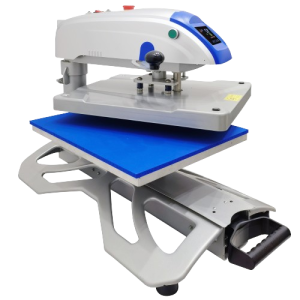
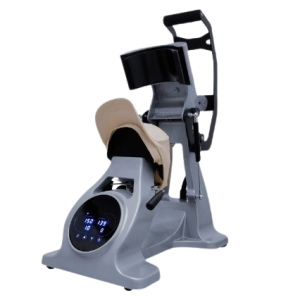
The design of a rosin press can vary considerably. Some models are compact and manually operated, while others use hydraulic or pneumatic systems to generate pressure. More advanced machines may include digital controls that monitor temperature and pressing time. Despite these differences, every rosin press is built around the same basic concept: controlled heat plus controlled pressure.
The machine does not create resin from nothing. Instead, it provides conditions that make naturally occurring resin easier to separate. Heat changes the physical properties of the resin, making it less resistant to movement, while compression reduces the space available within the plant material and encourages the resin to flow outward.

A rosin press is also different from equipment designed for solvent-based extraction. Rather than relying on a chemical substance to dissolve compounds and subsequently remove the solvent, the press relies primarily on mechanical action.
This relatively simple operating principle explains why the equipment can range from basic hand-operated designs to sophisticated commercial systems. Although the controls may become more advanced, the fundamental job of a rosin press remains the same: apply heat and pressure in a controlled environment to encourage solventless separation.
How Does a Rosin Press Work?
The easiest way to understand how a rosin press works is to think about the relationship between heat, pressure, and time. These three factors interact to create the conditions needed for resin separation. A rosin press brings those factors together through heated plates and a mechanism that compresses the material between them.
First, suitable material is positioned between the heated surfaces. As the material warms, its resin becomes softer and more capable of flowing. The purpose of heating is therefore not simply to make the material hot. Instead, heat changes the physical behavior of the resin.
Next, the plates move toward each other and compress the material. A rosin press uses mechanical force to reduce the available space within the material. As compression increases, softened resin is encouraged to move toward areas where resistance is lower.

Time is also important because heat needs an opportunity to transfer through the material, while pressure needs time to produce the desired physical separation. The precise balance depends on the machine and material, which is why there is no universal combination that applies to every situation.
The final stage is collection, where separated resin accumulates outside the compressed material. The machine itself does not perform a complex chemical conversion. Instead, a rosin press creates an environment in which existing resin can separate through physical forces.
This makes the process easier to understand. A rosin press is essentially a controlled mechanical system that uses warmth to improve flow and pressure to encourage separation. Its sophistication comes from controlling those simple principles consistently.
Why Heat Matters
Heat is one of the most important factors in the operation of a rosin press because temperature affects how easily resin can move. When resin is relatively cool, it can be thick and resistant to movement. As it warms, its viscosity generally decreases, allowing it to flow more readily under mechanical pressure.
The heated plates of a rosin press provide the thermal energy needed to create this change. However, the goal is controlled heating rather than simply reaching the highest possible temperature. Excessive heat can alter the characteristics of the material and may negatively affect the desired result.

A useful way to picture a rosin press is to imagine the difference between cold syrup and warmed syrup. Cold syrup tends to move slowly, while warmed syrup flows more easily. Resin behaves according to similar physical principles, although its composition and behavior are more complex.
Temperature also needs to be distributed consistently. If one area of the plates is substantially warmer than another, the material may experience uneven conditions. This can make the outcome less predictable.
For that reason, temperature stability is an important consideration when evaluating a rosin press. Accurate controls can help maintain consistent conditions, while poorly regulated heating can introduce unnecessary variation.
The correct thermal conditions depend on the characteristics of the material and the particular equipment being used. Rather than assuming that hotter is always better, it is more useful to understand what temperature is doing. A rosin press uses heat primarily to change resin flow characteristics, making mechanical separation possible without depending on chemical solvents.
Why Pressure Matters
Pressure is the second major ingredient in the operation of a rosin press. Heat can make resin easier to move, but pressure provides the mechanical force that encourages separation. When material is compressed between the plates, its internal structure is squeezed into a smaller space, creating conditions that encourage softened resin to move outward.
A rosin press can generate pressure in several ways. Manual models use leverage supplied by the operator, while hydraulic systems use fluid pressure and pneumatic systems use compressed air. Although these mechanisms differ, their purpose is similar: bring the heated plates together with controlled force.
It is important to understand that more pressure does not automatically produce a better result. A rosin press needs controlled force rather than simply the greatest force possible. Excessive mechanical stress can damage the material, create unwanted plant debris, or make the process less predictable.
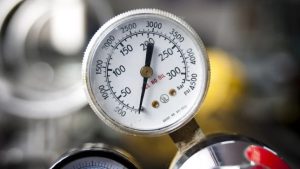
Pressure also needs to be distributed appropriately across the pressing area. Uneven contact between the plates can produce inconsistent conditions, particularly when the material is not positioned evenly.
The relationship between pressure and area is a basic principle of physics. The same overall force can produce different pressure depending on how that force is distributed. This helps explain why press design, plate dimensions, and mechanical construction can influence performance.
Ultimately, a rosin press uses pressure to complement the effects of heat. Heat makes resin more mobile, while pressure encourages that resin to leave the compressed plant structure. Understanding this relationship is more useful than viewing pressure as a simple race toward the highest possible number.
What Role Does Time Play?
Time is the third major factor that influences how a rosin press performs. Heat and pressure may create the right conditions for resin separation, but those conditions need to be maintained long enough for the physical process to occur effectively.
When a rosin press begins operating, heat must travel through the material. The exterior may warm more quickly than the interior, meaning that temperature does not necessarily become uniform immediately. Time allows thermal energy to distribute more evenly throughout the material.
Pressure also benefits from controlled timing. Once the material is compressed, maintaining the appropriate conditions gives softened resin an opportunity to move through the available spaces. The exact timing can vary depending on the material, equipment, and desired characteristics of the finished extract.
A rosin press therefore should not be viewed as a machine with one universal setting. Changing one variable can affect how the others behave. For example, altering temperature may change how quickly resin becomes mobile, while changing pressure can affect the speed and extent of separation.

This is why consistent observation is valuable. Experienced users generally pay attention to how the material responds rather than assuming that identical conditions will always produce identical outcomes.
The role of time can be compared to allowing ingredients to interact during cooking, although the processes are fundamentally different. Time provides an opportunity for the physical effects already created by heat and pressure to develop.
In simple terms, a rosin press needs the right conditions and enough time for those conditions to work together. Temperature, pressure, and timing are interconnected rather than independent controls.
What Happens Inside the Press?
Inside a rosin press, several physical changes occur at the same time. The heated plates transfer thermal energy into the material, while the mechanical system compresses that material. As temperature increases, resin can become less viscous and easier to move. As pressure increases, the plant structure becomes more compressed.
A rosin press creates an environment where these two effects reinforce each other. The plant material is physically squeezed, while its resin becomes more mobile. Under those conditions, resin can move away from the compressed structure and toward areas where there is less resistance.
It is helpful to imagine squeezing a warm, resin-rich material between two flat surfaces. The material becomes thinner as the surfaces approach each other. At the same time, the softened resin is pushed through pathways created by compression. This is essentially the physical principle behind the process.
A rosin press does not rely on a hidden chemical reaction to transform the material. Instead, it changes the physical environment surrounding naturally occurring resin. The machine supplies heat, pressure, and controlled contact while the material provides the resin being separated.
The exact behavior inside the plates can vary because plant materials are naturally inconsistent. Moisture, density, structure, and resin distribution can all influence how the material responds.
This is one reason equipment quality matters. A rosin press with stable heating and predictable mechanical movement can create more consistent conditions than a poorly constructed machine.
Although the process can appear sophisticated from the outside, its underlying physics are straightforward. The press combines thermal energy and mechanical compression to encourage a physical separation that would be difficult to achieve as efficiently without controlled equipment.
Manual vs. Automatic Rosin Presses
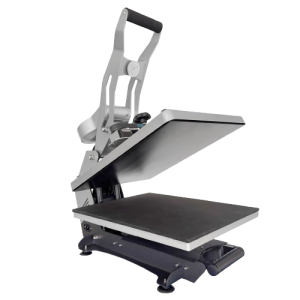
Not every rosin press operates in exactly the same way. The largest differences usually involve how pressure is generated and how temperature and timing are controlled. Manual machines rely on the operator to provide mechanical force, often through a lever or similar mechanism.
A manual rosin press can have a relatively simple design. The user controls the movement of the plates directly, giving the equipment a straightforward operating principle. These machines may appeal to people who prefer fewer electronic components and a more hands-on experience.
Hydraulic systems work differently. A hydraulic rosin press uses fluid pressure to generate mechanical force. This approach can make substantial and repeatable pressure easier to produce. Pneumatic models use compressed air for a similar purpose.
Automatic machines can go a step further by incorporating digital controls. Depending on the design, an electronic rosin press may allow users to monitor temperature, control timing, and manage other operating parameters through an interface.

The differences between these systems do not change the fundamental extraction principle. Every rosin press still depends on heat and pressure to encourage resin separation.
What changes is the way those conditions are produced and maintained. Manual systems may require more direct involvement, while automated designs can offer greater convenience and repeatability.
Choosing between these designs depends on factors such as intended use, budget, desired control, and equipment preferences. A more sophisticated rosin press is not necessarily better for every user. The most appropriate machine is one that can provide stable, predictable conditions while being straightforward and safe to operate.
What Makes a Good Rosin Press?
A good rosin press should provide consistent control over the conditions that matter most: heat, pressure, and time. Instead of focusing exclusively on impressive specifications, it is useful to consider how reliably the machine can maintain those conditions.
Temperature accuracy is particularly important. A rosin press with stable heating can provide more predictable conditions than one with significant temperature fluctuations. Even heating across the plates is also valuable because inconsistent thermal distribution can affect different parts of the material differently.
Mechanical construction matters as well. A sturdy rosin press should maintain proper alignment as the plates move together. Reliable alignment helps distribute pressure more consistently and reduces unnecessary movement during operation.
The method used to generate pressure is another consideration. Manual systems can provide simplicity, while hydraulic and pneumatic systems may provide greater mechanical control. Electronic controls can add convenience by allowing users to monitor settings more precisely.
Plate dimensions are also worth considering. Larger plates provide more surface area, while smaller designs may be more compact and easier to accommodate in limited spaces. The ideal size depends on the intended application.
Ease of use should not be overlooked. A rosin press with confusing controls or inconsistent operation can be frustrating regardless of how impressive its specifications appear.
Ultimately, a quality machine is one that performs its basic job consistently. The best rosin press is not necessarily the one with the largest pressure rating or the most features. It is the one that combines dependable heating, stable mechanical performance, suitable controls, and solid construction in a design that fits the user’s needs.
Common Misconceptions About Rosin Presses
There are several common misconceptions about how a rosin press works. One of the biggest is the belief that maximum heat automatically produces maximum extraction. In reality, excessive heat can change the characteristics of the material and may reduce the quality of the desired result.
Another misconception is that maximum pressure is always beneficial. A rosin press works through a balance of conditions rather than a single measurement. Applying excessive force can create unwanted problems without necessarily improving separation.
Some people also assume that every machine produces identical results. In practice, a rosin press can behave differently depending on its heating system, plate design, pressure mechanism, and construction quality. Material characteristics can create additional variation.
Another misunderstanding involves the term “solventless.” A rosin press does not depend on a chemical solvent to separate the resin, but that does not mean the process is completely free from safety considerations. Heated metal surfaces can cause serious burns, and machines capable of generating substantial mechanical force require careful handling.
It is also incorrect to think that a rosin press can compensate for every difference in source material. The machine can provide controlled physical conditions, but the material itself still influences the outcome.
These misconceptions often arise because extraction equipment can appear more mysterious than it really is. Once the basic principles are understood, the process becomes much easier to explain.
A rosin press is fundamentally a heat-and-pressure machine. It does not magically create a better material, nor does more heat or force automatically guarantee superior results. Consistency comes from understanding how the machine, material, and physical conditions interact.
Why Solventless Extraction Is Different
The defining characteristic of a rosin press is its reliance on mechanical separation rather than chemical solvents. In a solvent-based extraction process, a substance is used to dissolve selected compounds before those compounds are separated from the solvent. A rosin press takes a different physical approach.
Instead of introducing a solvent, the heated plates provide thermal energy while mechanical pressure compresses the material. The heat changes the flow characteristics of naturally occurring resin, and the pressure encourages that resin to separate from the plant structure.
This makes a rosin press relatively straightforward to understand from a scientific perspective. The process is based primarily on physical changes rather than the use of a chemical extraction medium.
Solventless extraction also has a distinctive appeal because the basic equipment can be compact. A rosin press can range from a small manually operated machine to a larger automated system, yet the underlying concept remains similar.
However, “solventless” should not be interpreted as meaning that safety is unimportant. A rosin press involves heated surfaces and, depending on its design, substantial mechanical force. Safe operation requires attention to the manufacturer’s instructions and appropriate precautions.
The term also does not mean that the resulting material is automatically superior in every respect. Quality depends on numerous factors, including the source material, equipment, operating conditions, and handling practices.
The major distinction is simply the extraction mechanism. A rosin press uses heat and pressure instead of a chemical solvent. Once that difference is understood, it becomes easier to appreciate why this type of equipment has developed into such a recognizable category of solventless extraction technology.
The Simple Explanation
If you want the simplest possible explanation of how a rosin press works, think of it as a powerful, temperature-controlled clamp. Two heated surfaces come together around suitable material, and their combined heat and pressure encourage resin to separate from the material.
A rosin press does not need a complicated chemical reaction to accomplish this. Heat changes how easily resin flows, while pressure compresses the material and encourages the softened resin to move outward. Time allows those conditions to interact.
This basic explanation covers the essential science without getting lost in technical terminology. The machine creates an environment in which naturally occurring resin can move away from the plant structure more readily than it would under ordinary conditions.

Different designs may look dramatically different, but the principle remains consistent. A compact manual rosin press and a large automated machine may use completely different mechanisms to generate force, yet both depend on the same combination of heat and pressure.
The most important point is that every variable interacts with the others. Temperature affects viscosity, pressure affects compression, and time determines how long those conditions are maintained. Changing one factor can therefore influence the overall behavior of the process.
Once this relationship is clear, a rosin press becomes much less intimidating. Instead of viewing it as a complicated extraction machine, it can be understood as a specialized tool for controlling familiar physical forces.
In short, the rosin press works by using heat to make resin more mobile and pressure to encourage separation. That simple combination is the foundation of the entire process, regardless of how advanced the equipment may appear.
Final Thoughts
A rosin press may look sophisticated, but its fundamental operating principle is remarkably simple. It brings together three important factors: controlled heat, mechanical pressure, and time. Each contributes to the physical separation of naturally occurring resin from suitable plant material.
The heated surfaces of a rosin press make resin more mobile by changing its viscosity. The mechanical system then compresses the material, encouraging the softened resin to move away from the plant structure. Time allows these physical effects to work together.
The process is different from solvent-based extraction because a rosin press does not depend on adding a chemical solvent. Instead, it uses mechanical and thermal forces to encourage separation.
Understanding this distinction makes the technology easier to appreciate. A rosin press is not a mysterious device that relies on hidden chemistry. It is a specialized machine designed to apply familiar physical principles in a controlled environment.
The equipment itself can vary considerably. Manual presses offer a direct mechanical approach, while hydraulic, pneumatic, and electronic systems can provide additional control and convenience. Regardless of the design, consistency remains one of the most important characteristics.
It is also worth remembering that equipment specifications alone do not determine results. Material characteristics, machine construction, temperature stability, pressure distribution, and timing can all influence performance.
Ultimately, the simplest way to understand a rosin press is to think of it as a controlled heat-and-pressure system. Heat helps resin flow, pressure encourages separation, and time allows the process to develop.
Once those fundamentals are clear, the technology becomes much easier to understand. What first appears complicated is, at its core, an application of straightforward physical principles.



Add comment